
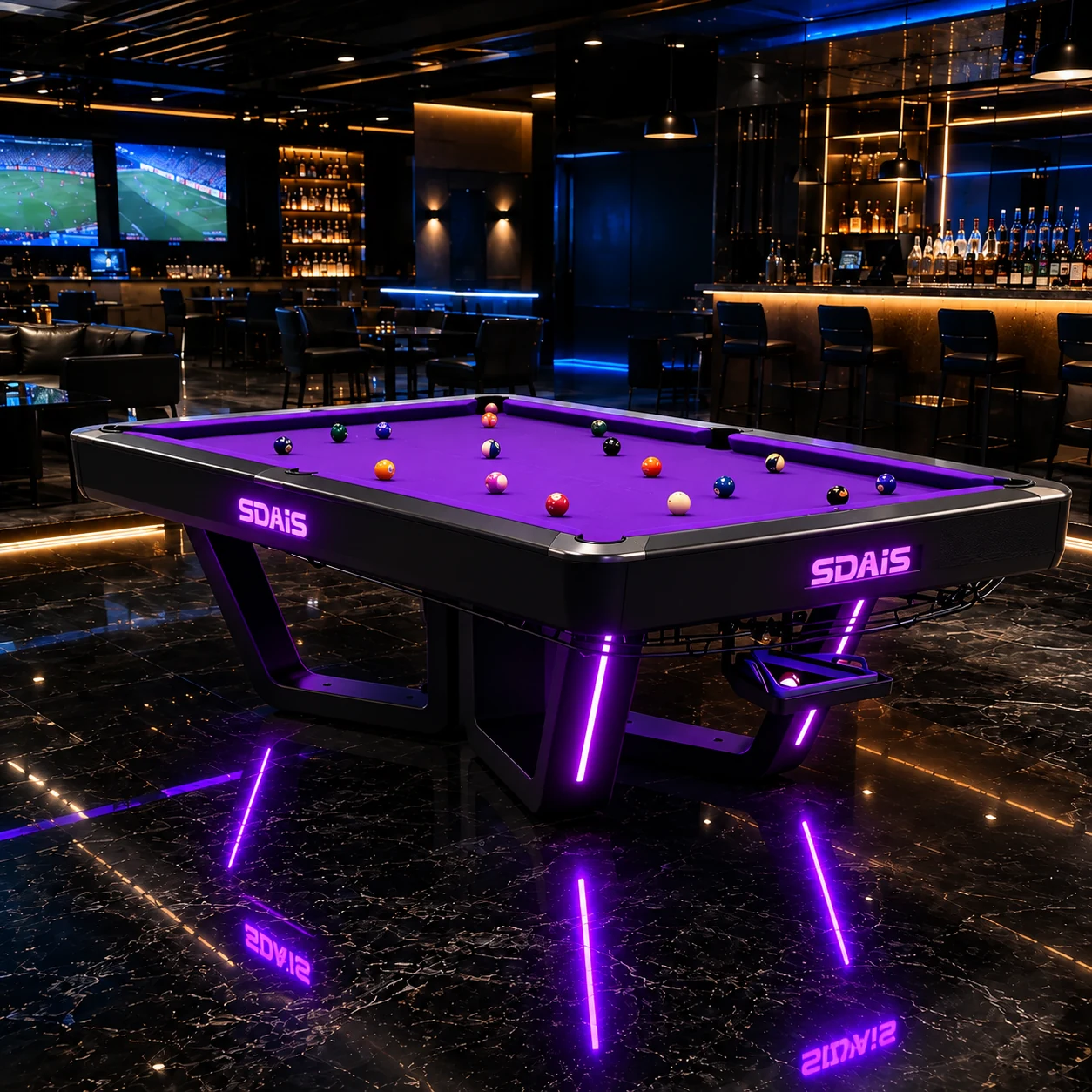
Evaluate the table before the lighting
Start with the playing format, slate or playing surface, frame support, cushions, pockets, leveling and ball-return requirements. Lighting should be added to a sound commercial platform rather than used to distract from missing structural information.
Ask for close views of the rails, frame, leg connection and service panels as well as night-time promotional images.
Specify the LED system in writing
Confirm where the light strips or modules are installed, how colors are controlled, the required voltage and plug, cable routing and the method for replacing failed components.
For an RGB system, ask whether the controller, remote and power supply are included. Destination electrical requirements should be written into the quotation.
- Lighting locations and color modes
- Voltage, plug and power-supply specification
- Controller and remote scope
- Replacement access and spare parts
Coordinate lighting with brand and interior design
Use cloth, cabinet, logo and lighting colors as one design system. Clubs may prefer several programmable colors; a hotel may need a quieter fixed presentation that matches the interior.
Request an approved visual reference and logo-placement drawing before production. Color appearance can change under venue lighting, so treat promotional renders as references rather than final color standards.
Plan commercial maintenance
Staff should be able to access the ball return, power components and wear parts without dismantling the entire table. Ask what cleaning products, inspection intervals and spare modules are recommended.
Include replacement lighting components and electrical diagrams in the project pack when the table will be installed far from the factory.